this article focuses on "comparative evaluation of international link performance between 100m hong kong server hosting and fiber optic direct connection", with the purpose of providing enterprises and webmasters with data-driven network selection basis. the evaluation focuses on four key indicators: latency, packet loss, bandwidth utilization, and stability, and considers differences in access experience in different regions and adaptation suggestions for actual business scenarios.
this comparison is based on the principles of repeatability and quantification, using multi-point concurrent detection, continuous packet interval sampling and parallel throughput testing. by initiating ping, traceroute, iperf3 and http download tests from multiple geographical nodes to the same 100m hong kong computer room and fiber direct connection target, we ensure that the results are representative and can be used for seo and geo strategic decisions.
the test environment includes standard 100m hong kong server hosting lines and direct connection channels via submarine optical cables. the sample covers multiple cabinets and cross-border direct links in the hong kong data center. the node distribution covers mainland china, southeast asia, europe, the united states and japan to reflect the differences in common international access paths, and excludes peak periods of network congestion to reduce occasional errors.
performance evaluation uses four key indicators: round-trip delay (rtt) measures response speed, jitter measures delay fluctuations, packet loss rate evaluates data reliability, and throughput represents bandwidth utilization efficiency. each indicator uses statistical methods to calculate the median and 95th percentile to facilitate comparison of the performance gap between the two access methods under different loads.
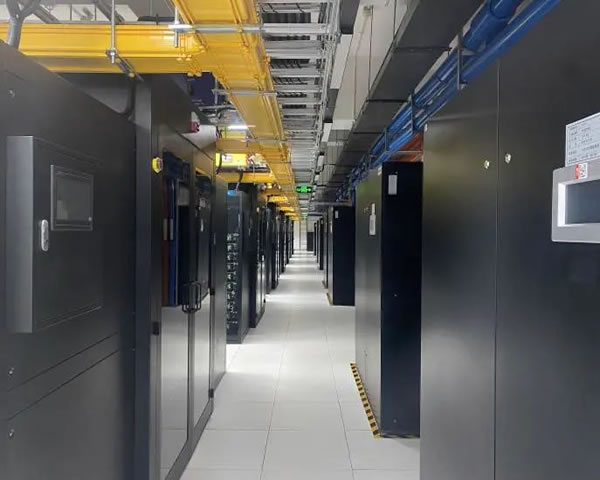
100m hong kong servers hosted in close areas (hong kong, macao and south china) usually show lower rtt and stability, but multi-hop routing and path uncertainty in transoceanic links will lead to increased latency and jitter. in terms of bandwidth utilization, 100m access can meet the needs of most small and medium-sized sites under short-term concurrency, but long-term high concurrency scenarios may be affected by link sharing.
due to the characteristics of a small number of intermediate switching nodes and dedicated lines, fiber direct connection usually achieves lower latency, more stable packet loss rate and higher sustained throughput capability in cross-border and remote access. for users distributed in multiple countries or applications with high real-time requirements (such as finance, voice and video), direct fiber connection can significantly improve the predictability and user experience of international links.
tests show that the gap between the two is small in east asia, but the average rtt of fiber direct connection in transoceanic scenarios is 10% to 30% lower than that of 100m hosting, and the jitter is also significantly smaller. for delay-sensitive services, choosing optical fiber direct connection can significantly reduce response time fluctuations and improve real-time interaction stability and user perception speed.
in terms of packet loss rate, fiber direct connection maintained a packet loss level of less than 0.5% in long-term stress tests, while 100m hosting increased the probability of occasional packet loss under link sharing and multi-hop conditions. stability evaluation shows that direct links have better performance consistency during congestion relief and fault recovery, which is conducive to business deployment with higher sla requirements.
the throughput test shows that fiber optic direct connection can maintain an output closer to the theoretical bandwidth during sustained high concurrent transmission, while 100m hosting experiences bandwidth jitters during burst traffic or concurrent downloads by multiple people. for services that require stable peak bandwidth, direct connection provides more reliable bandwidth guarantee, while 100m hosting is suitable for ordinary business and cost-sensitive scenarios.
based on the "comparative evaluation of the international link performance of 100m hong kong server hosting and fiber direct connection", the conclusion is that fiber optic direct connection is more suitable for cross-border businesses that have high requirements for latency, stability and sustained bandwidth; 100m hong kong hosting has advantages in localized access and cost control. it is recommended to weigh the selection based on user distribution, business delay sensitivity and budget, and combine cdn and intelligent routing to optimize the international link experience.
- Latest articles
- The Leasing Terms And Exemptions Of The Hong Kong Station Cluster Must Be Verified Before Signing The Contract
- Affordable U.S. High-defense Server Operation And Maintenance Strategy Includes Automation And Cost Optimization Methods For Monitoring
- How SMEs Can Choose Vietnam Site Cluster Servers: Cost-performance And Technical Support Evaluation
- When Choosing A Xingtai VPS Hong Kong Server, You Need To Evaluate The Quality Of Service And After-sales Standards
- How To Determine Which US Server Hosting Provider Is Best Suited Through Trials And Speed Tests
- FAQ Collection: Infinite Rule + Thailand Server Disconnection And Lag Solutions
- Guide: How Chinese Users Can Handle Cross-border Latency And Login Issues On Korean Servers
- Recommended Operations And Monitoring Tools For Purchasing Cloud Servers In Thailand
- What To Do If A Hong Kong Data Center Goes Down, Quickly Pinpoint The Cause And Activate Backup Measures
- Comparing The Advantages And Disadvantages Of Singapore Cloud Server VPS Versus Dedicated Servers Helps You Make A Choice
- Popular tags
-

Reasons And Recommendations For Choosing Hong Kong Mobile Serverless
this article discusses the reasons and recommendations for choosing hong kong mobile serverless, analyzes its advantages and applicable scenarios, and helps you make a wise choice. -

Industry Self-discipline And Regulatory Approaches Explore Long-term Mechanisms To Curb Computer Room Fraud In Shatin, Hong Kong
this article discusses industry self-discipline and regulatory paths, aiming to build a long-term mechanism to curb computer room fraud in sha tin, hong kong, analyze existing shortcomings, technical and legal countermeasures, as well as suggestions for public education and collaborative law enforcement. -

Key Points Of The Hosting Contract And Service Commitments For The Hong Kong Site Group From A Long-Term Operations Perspective
An analysis of the key points of the hosting contract and service commitments for the Hong Kong site cluster from a long-term operations perspective, covering key areas such as SLAs, bandwidth, backup, legal compliance, and handover of operations, to provide guidance for the stable operation of the site cluster.